




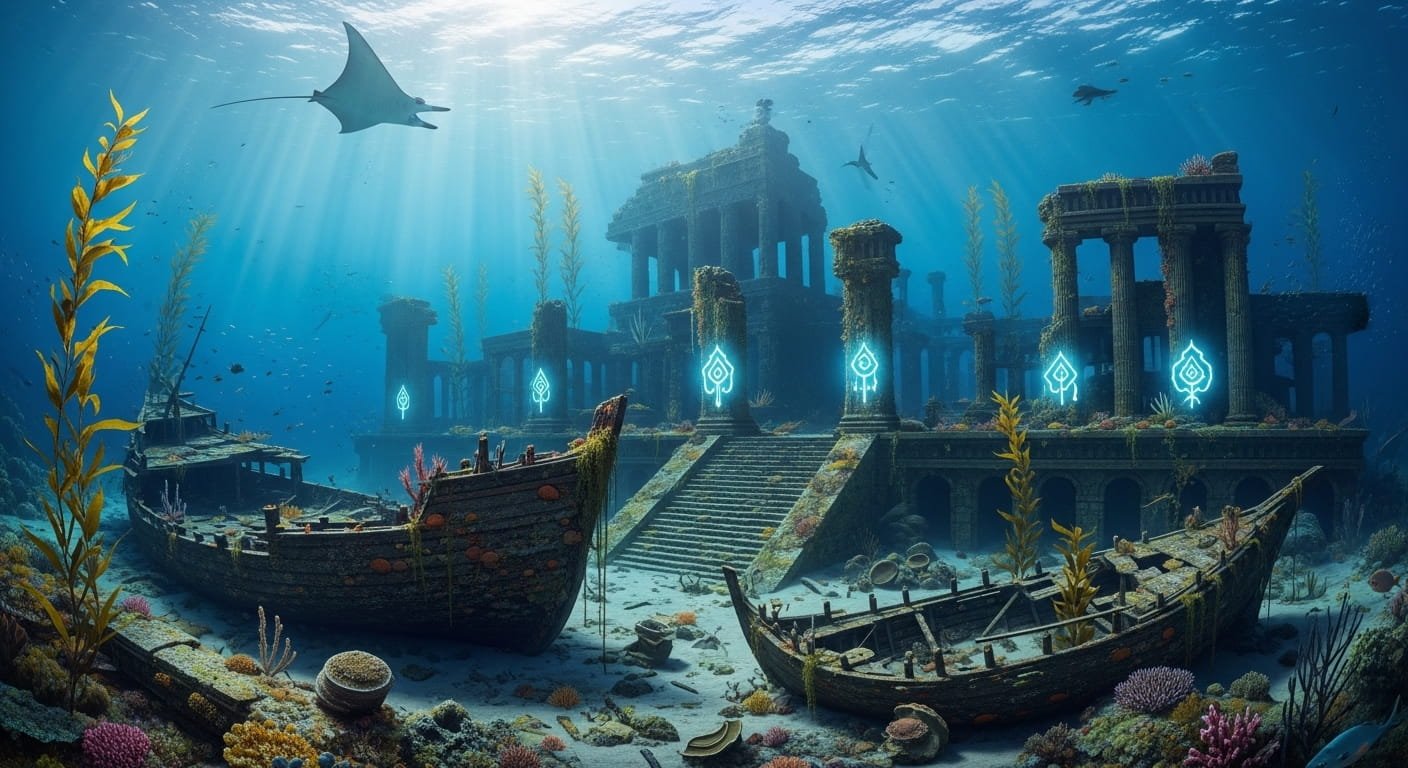
The story of the Lost City of Atlantis has captivated human imagination for over two millennia. First described by the ancient Greek philosopher Plato around 360 BCE in his dialogues Timaeus and Critias, Atlantis is depicted as a powerful and technologically advanced civilization that vanished beneath the sea in a single day and night.
Was Atlantis a real place, a cautionary tale, or an allegorical story? Over the centuries, scholars, explorers, and scientists have debated the existence, location, and meaning of this legendary city. Its enduring appeal lies not just in the idea of a sunken metropolis but in the mysteries surrounding ancient civilizations, natural catastrophes, and human hubris.
This article explores the origins, historical context, classical accounts, archaeological theories, possible locations, modern research, and cultural impact of Atlantis, providing a comprehensive overview of one of history’s greatest enigmas.
Origins and Historical Accounts
Atlantis first appeared in the works of Plato, who presented a detailed narrative about a prosperous civilization that existed roughly 9,000 years before his time. According to Plato, Atlantis was a powerful island kingdom located beyond the “Pillars of Hercules,” known today as the Strait of Gibraltar. It was a highly advanced society, notable for its impressive architecture, extensive canals, and sophisticated engineering.
Over time, however, the citizens of Atlantis became morally corrupt, which ultimately led to the civilization’s downfall. In a single catastrophic event, Atlantis was swallowed by the ocean, disappearing without a trace. Plato’s account remains the only ancient source that provides such a detailed description, while other Greek writers, including Aristotle, and historians like Thucydides, mention Atlantis only indirectly or in passing.
Why Atlantis Remains a Mystery
Several factors contribute to the enduring mystery of Atlantis:
- No Archaeological Evidence—Despite centuries of exploration, no confirmed ruins have been discovered that match Plato’s description.
- Allegorical vs. Historical Debate—Scholars debate whether Atlantis was a real place or a philosophical metaphor about hubris and morality.
- Uncertain Location—Various proposed locations include the Mediterranean, the Caribbean, Antarctica, and the Azores.
- Natural Catastrophes—Some researchers hypothesize that ancient earthquakes, volcanic eruptions, or tsunamis may have destroyed a real civilization.
Theories About Atlantis
1. Plato’s Allegorical Interpretation
Some historians argue that Plato created Atlantis as an allegory to illustrate moral lessons about greed, hubris, and the decline of civilizations. This theory emphasizes that Atlantis may never have existed physically.
2. Real Lost Civilization
Others propose that Atlantis was a real advanced civilization, possibly a Bronze Age society that experienced sudden destruction. Evidence of sophisticated urban planning and ancient maritime cultures supports the plausibility of lost civilizations.
3. Santorini and the Minoan Civilization
Many researchers suggest that Plato may have based Atlantis on the Minoan civilization on Crete and Santorini (ancient Thera), which suffered a massive volcanic eruption around 1600 BCE. This catastrophic event could have inspired the story of a sunken city.
4. Alternative Locations
Other proposed locations for Atlantis have captured the imagination of researchers and enthusiasts alike. Some suggest the Caribbean, pointing to submerged islands such as the Bahamas as possible remnants of the lost civilization. Others turn to Antarctica, with speculative theories linking the legend to shifting continents over millennia. The Azores Islands have also been proposed, thought by some to be sunken extensions of the archipelago. While none of these theories has been conclusively proven, each contributes to the ongoing intrigue and inspires further scientific and historical exploration of the Atlantis legend.
Modern Research and Investigations
Recent research combines archaeology, geology, and marine exploration to investigate the plausibility of Atlantis.
- Underwater Archaeology: Oceanographers and divers have explored submerged structures and landforms, searching for remnants of lost cities.
- Geological Evidence: Some researchers have analyzed ancient coastlines and tectonic activity to identify possible catastrophic events consistent with Plato’s account.
- Satellite Imaging and Remote Sensing: Technology has revealed submerged formations in the Mediterranean, Caribbean, and Atlantic Ocean. While intriguing, none conclusively matches Atlantis.
Modern scholars also study cultural diffusion, suggesting that myths of sunken lands are common across human societies and may have inspired the Atlantis story.
Cultural Impact and Legacy
Atlantis has fascinated people for centuries, leaving a lasting mark on literature, art, and popular culture. In classical literature, many Greek and Roman writers referred to lost civilizations inspired by the story of Atlantis, weaving its legend into their works and philosophical discussions. Over time, Atlantis has also become a popular theme in modern novels and films, appearing in creations such as Jules Verne’s 20,000 Leagues Under the Sea, various Disney adaptations, and countless science fiction and fantasy stories.
Beyond fiction, the idea of Atlantis has inspired pseudoscience and fringe theories, with some speculating about extraterrestrial connections, advanced ancient technology, and hidden knowledge. Today, Atlantis continues to symbolize the ultimate mystery, reminding us that even the most powerful civilizations are vulnerable to the forces of nature and the passage of time.
Conclusion
The Lost City of Atlantis remains one of history’s most enduring mysteries. Whether it was a real ancient civilization, an allegorical tale, or a combination of historical events and philosophical storytelling, the legend continues to inspire curiosity and exploration. Modern research has shed light on possible inspirations for Plato’s story, including the Minoan eruption, submerged coastal areas, and ancient maritime cultures. Yet, the complete truth behind Atlantis is still elusive, keeping the legend alive for scholars, explorers, and dreamers alike.
Atlantis represents humanity’s fascination with lost civilizations, ancient technology, and the mysteries of the deep oceans — a story that blends history, myth, and imagination in a way that continues to captivate the world.
FAQs
1. Did Atlantis really exist?
There is no definitive archaeological evidence, but Plato’s account and historical events may be based on real civilizations.
2. Where was Atlantis located?
Proposed locations include the Mediterranean, Caribbean, Azores, and even Antarctica, but none have been confirmed.
3. Was Atlantis destroyed by a natural disaster?
Plato describes a catastrophic flood or earthquake that sank Atlantis in a single day and night.
4. Is Atlantis mentioned outside Plato’s works?
No classical source describes Atlantis in detail; Plato is the primary source.
5. Why does the legend of Atlantis still fascinate people?
It combines mystery, ancient advanced civilizations, moral lessons, and the allure of the unknown, inspiring generations of researchers and storytellers.