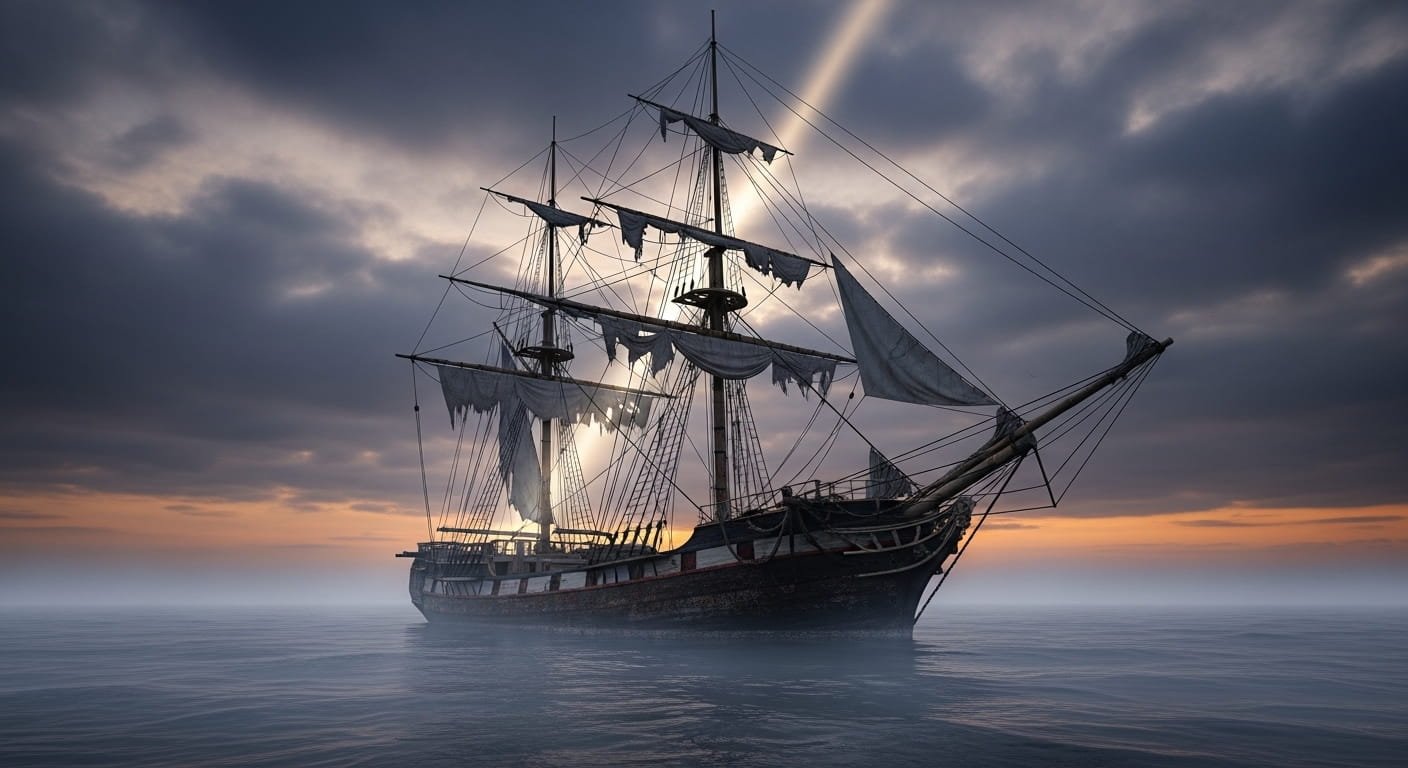





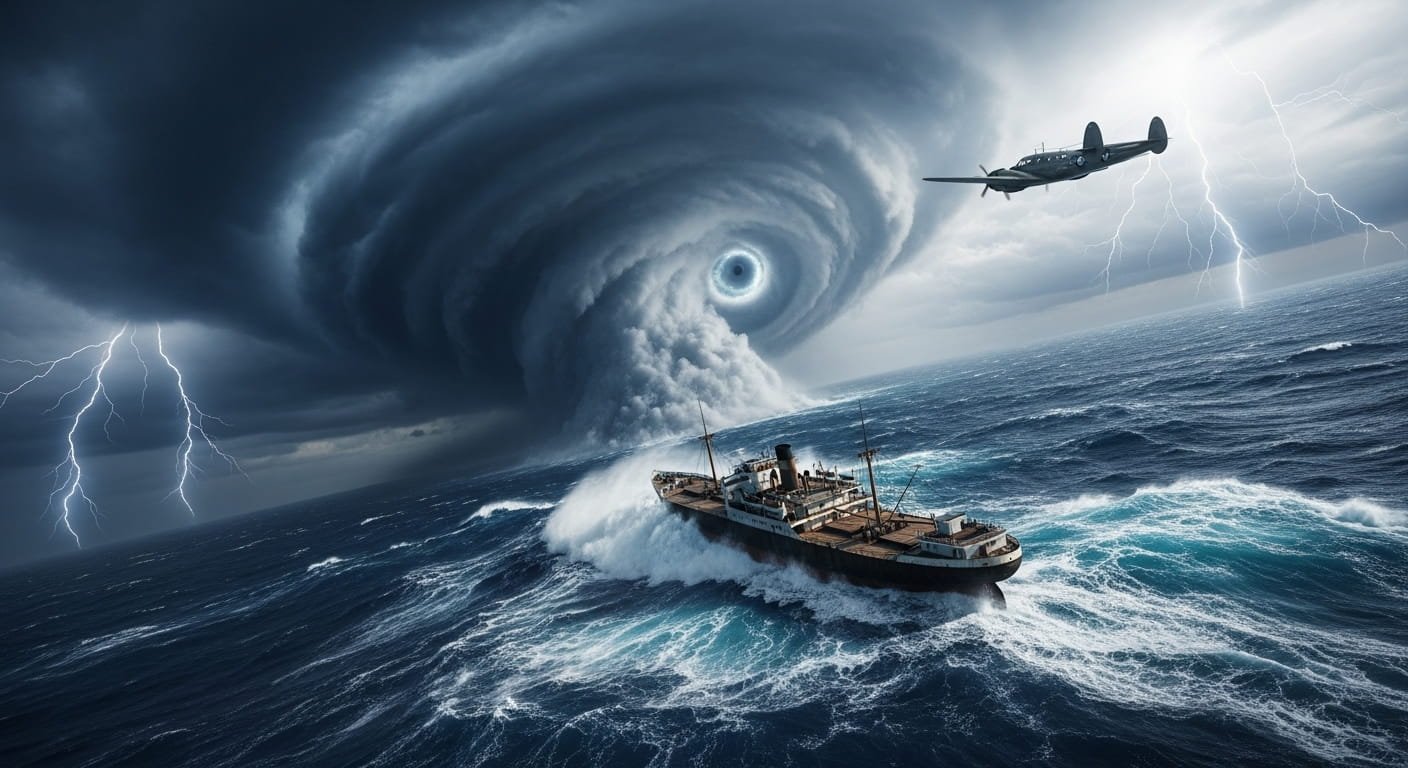
The Bermuda Triangle mystery is one of the most searched and debated topics in modern history. For decades, people around the world have been fascinated by stories of vanished ships, missing aircraft, strange compass readings, and unexplained radio silence in a region of the Atlantic Ocean known as the Bermuda Triangle. Often described as the Devil’s Triangle, this area has become a symbol of the unknown, a place where science, legend, and imagination collide.
The Bermuda Triangle is generally defined by three points: Miami in Florida, Bermuda Island, and San Juan in Puerto Rico. Within this vast triangular region, numerous vessels and aircraft have reportedly disappeared under mysterious circumstances. Some incidents are well documented, while others have been exaggerated or distorted over time.
Is the Bermuda Triangle truly a paranormal hotspot? Are aliens, time warps, or the lost city of Atlantis responsible? Or are natural forces such as storms, human error, and ocean currents enough to explain the mystery? In this comprehensive guide, we will explore the full history, key disappearances, scientific explanations, conspiracy theories, and modern research surrounding the Bermuda Triangle mystery.
What Is the Bermuda Triangle?
The Bermuda Triangle is not an officially recognized geographic region. It does not appear on international maritime charts, and no government agency formally defines its boundaries. However, it is commonly described as an area in the western North Atlantic Ocean spanning between Florida, Bermuda, and Puerto Rico.
The size of the Bermuda Triangle varies depending on interpretation, ranging from approximately 500,000 to 1.5 million square miles. Despite its fearsome reputation, this region is one of the busiest shipping lanes in the world. Commercial aircraft and cargo ships travel through it daily without incident.
The mystery of the Bermuda Triangle does not stem from ancient folklore. Instead, it gained popularity in the mid-20th century through newspaper articles and bestselling books that highlighted unexplained disappearances.
Early Historical References and Origins of the Legend
Although the Bermuda Triangle became famous in the 1900s, some claim its mystery dates back centuries. Christopher Columbus reportedly noted strange compass variations and mysterious lights in the sky during his 1492 voyage through the Atlantic. While historians debate the interpretation of his journals, these stories are often cited as early evidence of unusual activity in the region.
The modern Bermuda Triangle legend began in 1950 when journalist Edward Van Winkle Jones published an Associated Press article about strange disappearances in the Atlantic. In 1964, writer Vincent Gaddis used the term “Bermuda Triangle” in a magazine article describing mysterious losses of ships and aircraft.
The mystery gained global attention in 1974 with the publication of The Bermuda Triangle by Charles Berlitz. His book presented dramatic accounts of vanishings and suggested supernatural explanations. Although critics later exposed inaccuracies in some claims, the book became a bestseller and cemented the Bermuda Triangle as a worldwide phenomenon.
Geography and Environmental Conditions of the Bermuda Triangle
Understanding the geography of the Bermuda Triangle is essential to separating myth from reality. The region contains deep ocean trenches, powerful currents, and rapidly changing weather systems.
One significant feature is the Gulf Stream, a strong ocean current flowing from the Gulf of Mexico toward Europe. The Gulf Stream can move at speeds of up to four knots, meaning that any debris from a shipwreck or aircraft crash could be quickly carried away, making recovery extremely difficult. The Puerto Rico Trench, located within the Triangle, is the deepest part of the Atlantic Ocean, reaching depths of over 27,000 feet. If a ship or plane sank in this area, recovery would be nearly impossible.
The region is also prone to hurricanes and tropical storms. Sudden weather changes, powerful squalls, and rogue waves can pose serious risks to both ships and aircraft. In earlier centuries, before modern forecasting systems, sailors had little warning of approaching storms. These natural environmental conditions provide logical explanations for many accidents attributed to the Bermuda Triangle mystery.
Major Bermuda Triangle Disappearances
Flight 19
One of the most famous incidents in Bermuda Triangle history is the disappearance of Flight 19. On December 5, 1945, five U.S. Navy TBM Avenger torpedo bombers departed from Fort Lauderdale, Florida, on a routine training mission. During the flight, the squadron leader reported that his compass was malfunctioning. The pilots became disoriented and unsure of their location.
Radio communications revealed confusion and deteriorating weather conditions. Eventually, all contact was lost. A rescue aircraft sent to search for Flight 19 also disappeared. In total, 27 men vanished. No confirmed wreckage was ever recovered, making Flight 19 one of the most enduring Bermuda Triangle mysteries.
USS Cyclops
The disappearance of the USS Cyclops in March 1918 remains one of the largest non-combat losses of life in U.S. Naval history. The massive cargo ship was traveling from Barbados to Baltimore with 309 crew members aboard when it vanished without sending a distress signal. No wreckage was found, and no definitive explanation was ever confirmed. Some theories suggest structural failure due to overloading, while others point to storms or mechanical issues. The lack of evidence contributed significantly to the Bermuda Triangle legend.
The Star Tiger and Star Ariel
In 1948 and 1949, two British passenger aircraft, Star Tiger and Star Ariel, disappeared in separate incidents near Bermuda. Both aircraft were well maintained and flown by experienced crews. Weather conditions were reported as manageable. Despite extensive searches, no trace of the planes was found. These disappearances added to the growing reputation of the Bermuda Triangle as a dangerous and mysterious region.
Scientific Explanations for the Bermuda Triangle Mystery
While dramatic stories capture public imagination, scientists largely reject supernatural explanations. Instead, they offer logical and evidence-based reasons for incidents. Human error is a major factor. Navigation in earlier decades relied heavily on compass readings and celestial navigation. Even small errors could lead to catastrophic consequences over vast ocean distances. Weather plays a critical role. Hurricanes, tropical storms, and sudden microbursts can develop quickly in the Atlantic. Before modern radar systems, pilots and sailors often had limited warning.
The Gulf Stream’s powerful current can rapidly disperse debris, creating the illusion that ships and planes vanished without a trace. Magnetic variation is another explanation. The Bermuda Triangle lies near a region where magnetic north and true north align, which may cause compass confusion for inexperienced navigators. However, this phenomenon is not unique to the Triangle.
Some researchers have proposed methane gas eruptions from the ocean floor as a possible cause of sudden sinkings. Methane bubbles could theoretically reduce water density, causing ships to lose buoyancy. However, direct evidence linking this phenomenon to Bermuda Triangle incidents remains limited.
Paranormal and Conspiracy Theories
Despite scientific explanations, paranormal theories continue to thrive. Many people believe the Bermuda Triangle mystery cannot be fully explained by natural causes. Some claim extraterrestrials are responsible for disappearances, suggesting underwater alien bases or advanced technology interfering with navigation systems. Others connect the Triangle to the lost city of Atlantis, arguing that ancient crystals or advanced Atlantean technology emit energy disrupting ships and aircraft.
Time warp theories suggest that the Bermuda Triangle contains portals to other dimensions. Stories of electronic fog, time distortion, and unexplained lights are frequently shared online. Although these theories lack scientific evidence, they remain popular because they offer dramatic explanations for unexplained events.
Is the Bermuda Triangle Real?
The Bermuda Triangle exists as a loosely defined geographic region, but it is not officially recognized as a dangerous zone. The United States Coast Guard and Navy have repeatedly stated that the number of incidents in the area is not significantly higher than in other busy ocean regions. Modern aviation and maritime industries do not consider the Bermuda Triangle unusually hazardous. Thousands of ships and planes safely cross it each year. The perception of danger largely stems from media amplification, selective reporting, and sensational storytelling.
Modern Research and Technology
Advances in satellite navigation, GPS systems, weather forecasting, and sonar mapping have dramatically improved safety in the Atlantic Ocean. Deep-sea exploration technology has mapped previously unknown underwater structures and trenches. Researchers using oceanographic modeling have simulated drift patterns and fuel consumption scenarios to better understand incidents like Flight 19.
Despite decades of investigation, no credible scientific evidence supports paranormal explanations. Most experts conclude that natural factors combined with human error account for the majority of Bermuda Triangle disappearances.
Why the Bermuda Triangle Remains Popular
The Bermuda Triangle mystery endures because it combines real historical events with imagination and fear of the unknown. The ocean remains one of Earth’s least explored frontiers. Its vastness and unpredictability naturally inspire awe and speculation. Psychologically, humans are drawn to mysteries. When evidence is incomplete, stories fill the gaps. The Bermuda Triangle represents the perfect mix of documented tragedies and dramatic interpretation. Media, books, documentaries, and internet content continue to keep the mystery alive, ensuring it remains one of the most searched topics on Google.
Conclusion
The Bermuda Triangle mystery is a powerful example of how fact, speculation, and storytelling can merge into a global legend. While disappearances like Flight 19 and the USS Cyclops remain tragic and partially unresolved, scientific research strongly supports natural explanations rather than supernatural forces. There is no credible evidence of aliens, time portals, or ancient Atlantean energy fields. Instead, weather, navigation challenges, ocean currents, and human error provide logical explanations.
Yet the mystery continues to fascinate millions. The Bermuda Triangle symbolizes humanity’s curiosity about the unknown and our enduring fascination with unexplained phenomena. Whether viewed through a scientific lens or as a cultural legend, the Bermuda Triangle remains one of the greatest modern mysteries ever told.
FAQs
1. What is the Bermuda Triangle?
The Bermuda Triangle is a region in the western North Atlantic Ocean where ships and planes have reportedly disappeared under mysterious circumstances.
2. Where is the Bermuda Triangle located?
It lies between Miami (Florida), Bermuda Island, and San Juan (Puerto Rico), forming a triangular shape in the Atlantic Ocean.
3. Why is the Bermuda Triangle famous?
It became famous due to unexplained disappearances of ships and aircraft, especially incidents like Flight 19 and the USS Cyclops.
4. Is the Bermuda Triangle real?
The area exists geographically, but it is not officially recognized as dangerous by maritime or aviation authorities.
5. How many ships and planes have disappeared there?
There is no confirmed official number. Many claims are exaggerated, and incidents are comparable to other busy ocean regions.
6. What caused the disappearances?
Most scientists point to natural causes such as severe weather, human error, strong ocean currents, and navigational challenges.
7. Has anyone survived the Bermuda Triangle?
Yes. Thousands of ships and planes safely pass through the area every year.
8. Is the Bermuda Triangle still dangerous today?
Modern navigation systems, GPS, and weather forecasting have made travel through the region safe.
9. Is Atlantis connected to the Bermuda Triangle?
Some conspiracy theories claim the lost city of Atlantis lies beneath the Triangle, but there is no scientific evidence to support this.
10. Are there aliens in the Bermuda Triangle?
There is no credible scientific evidence linking extraterrestrial activity to the region.