




The Roanoke Colony was the first English attempt to establish a permanent settlement in North America. Founded in 1587 on Roanoke Island, present-day North Carolina, it is famous as the Lost Colony because its settlers disappeared mysteriously, leaving behind only cryptic clues.
This mystery is one of the earliest and most enduring puzzles in American history. Over centuries, historians, archaeologists, and scholars have examined the colony, offering theories ranging from natural disaster to assimilation with Native American tribes.
In this article, we explore every detail about Roanoke, including its founding, the daily life of settlers, interactions with local tribes, disappearance theories, archaeological findings, cultural significance, and modern research.
Early English Exploration and the Foundation of Roanoke
English Interest in the New World
In the late 16th century, England aimed to establish colonies in North America as a way to compete with Spain’s vast empire. The motivations for this expansion included gaining access to new resources and trade routes, securing a strategic military advantage against Spain, and spreading Protestant influence. Sir Walter Raleigh, a prominent English courtier, played a key role in these efforts by obtaining a charter from Queen Elizabeth I, granting him the authority to explore and establish colonies along the North American coast.
The 1585 Roanoke Attempt
The first attempt to settle Roanoke took place in 1585 under the leadership of Governor Ralph Lane. The colonists faced numerous challenges, including harsh terrain and an unfamiliar climate, hostile encounters with local Native American tribes, shortages of food and essential supplies, and a lack of adequate support from England. Due to these difficulties, the initial settlement ultimately failed, and the colonists were forced to return to England.
The 1587 Roanoke Settlement
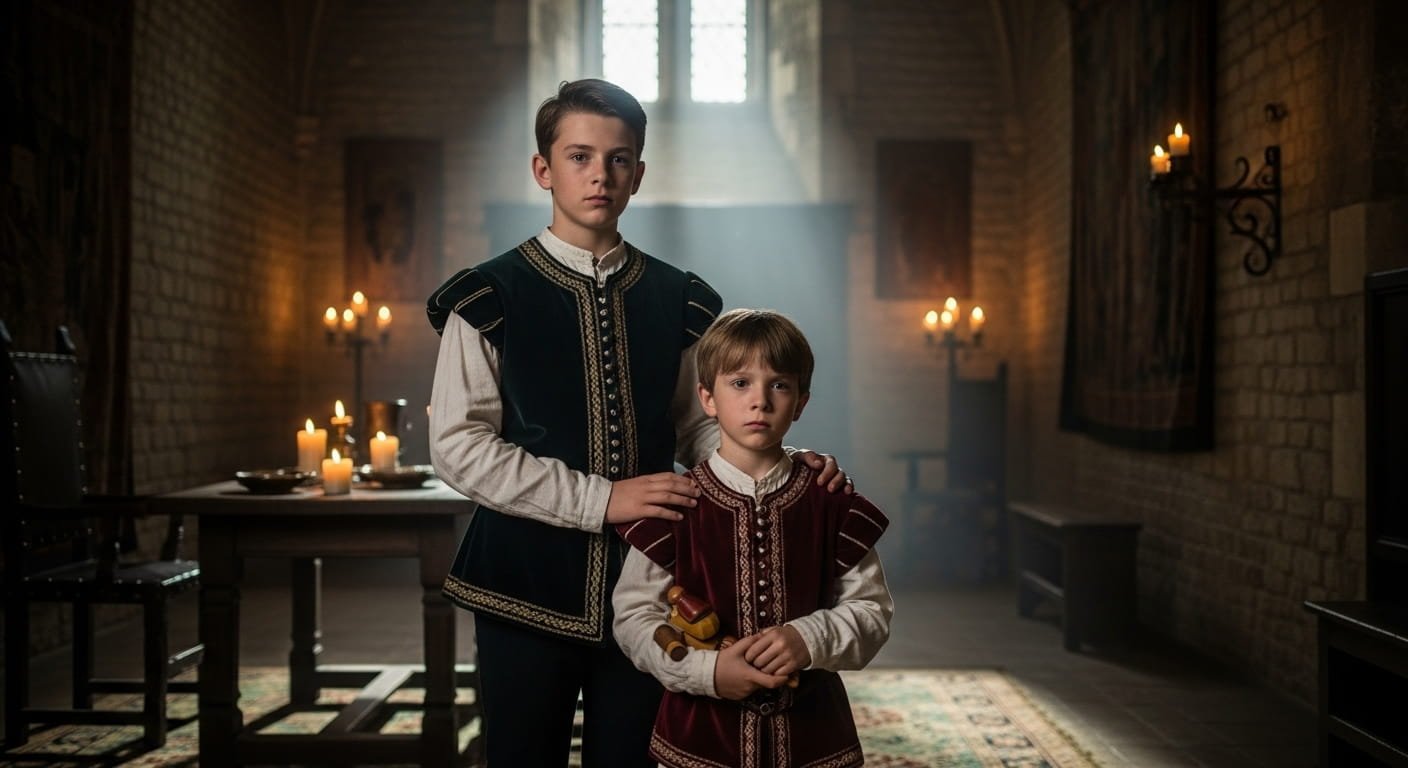
The second attempt to settle Roanoke, led by Governor John White, involved 115 settlers, including men, women, and children, marking the first English effort at a permanent colony in the New World. Among the notable members were Eleanor Dare, one of the first English women to settle in America, and her daughter Virginia Dare, who became the first English child born in the New World. Shortly after establishing the colony, White returned to England to gather supplies, intending to be away only briefly, but his return was delayed for three years due to war and severe storms.
Life in the Colony
Life on Roanoke Island was challenging:
Environment and Geography
The settlers faced additional hardships due to the island’s challenging environment. Dense forests and marshlands made farming difficult, limiting their ability to grow sufficient food. Tropical storms and hurricanes frequently threatened crops and shelters, causing further instability. Moreover, the island’s isolation meant that deliveries of supplies from England were irregular, leaving the colonists vulnerable and undersupplied.
Relations with Native Tribes
The settlers’ interactions with local Native American tribes played a crucial role in their survival. Friendly tribes, such as the Croatan and Secotan, offered assistance and engaged in trade, helping the colonists obtain food and resources. However, some tribes were hostile and resisted European settlement, creating tension and conflict. These relationships were not only vital for day-to-day survival but have also influenced many of the theories surrounding the later disappearance of the Roanoke colonists.
Daily Life
The Roanoke settlers tried to sustain themselves through farming, hunting, and fishing, while craftsmen worked to build homes and tools using the limited resources available. The colony’s social structure included a governor, a council, and organized family units, providing some order and governance. Despite these efforts, the settlement struggled to achieve self-sufficiency, as the colonists had limited experience with the local environment and faced harsh living conditions that made survival difficult.
Governor John White’s Return to England
In late 1587, Governor John White returned to England to gather supplies for the Roanoke colony. However, his return to America was delayed by the outbreak of the Anglo-Spanish War, along with hurricanes and a shortage of available ships. When he finally returned in 1590, he found the colony completely abandoned. This three-year gap created a critical window of mystery during which the settlers vanished, giving rise to the enduring enigma of the “Lost Colony” of Roanoke.
The Disappearance
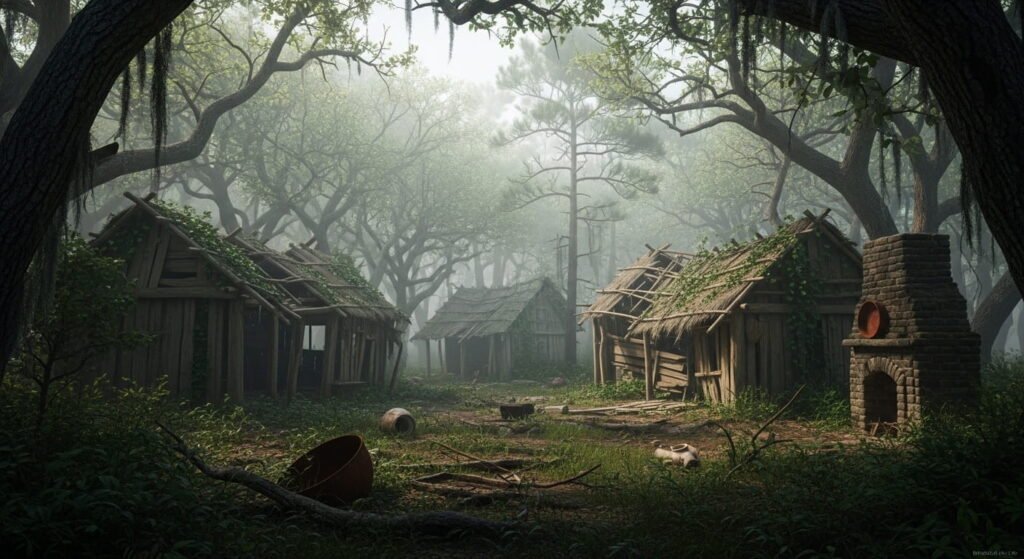
When John White returned to Roanoke, he found that no settlers remained. The structures of the colony were still intact but completely empty, offering no clear explanation for their disappearance. The only clue left behind was the word “CROATOAN” carved into a post, along with the letters “CRO” carved into a nearby tree, hinting at a possible connection to the Croatoan tribe but providing no definitive answers.
Theories of Disappearance
Integration with Local Tribes
Archaeological evidence has revealed European artifacts at some Native American sites, suggesting contact between the Roanoke settlers and local tribes. This has led historians to consider the possibility that some of the English colonists were adopted into Native American communities, integrating with the tribes after the disappearance of the main settlement.
Spanish Attack
Some theorists have proposed that Spanish forces may have attacked and destroyed the Roanoke colony. However, there are no confirmed historical records or evidence to support this theory, leaving it largely speculative.
Disease, Starvation, or Natural Disaster
Hurricanes, food shortages, or disease could have decimated the settlers
Relocation
Settlers may have tried moving inland for safety
Combination Theories
Multiple factors may have contributed: tribal integration plus environmental challenges
Archaeological Research and Discoveries
Excavations on Roanoke Island
Archaeologists have carried out extensive excavations at and around Roanoke Island. They have uncovered tools, pottery, and other remnants that suggest interaction between the settlers and Native American communities. Additionally, ground-penetrating radar has revealed potential settlement structures, providing further clues about where the colonists may have lived and how they adapted to their environment.
Croatoan Clues
Artifacts found near Hatteras Island suggest some settlers may have moved there, possibly assimilating into local tribes.
DNA and Anthropological Studies
Genetic studies have been conducted to determine whether descendants of the Roanoke settlers might exist among coastal Native American tribes. While some results suggest that partial assimilation of the colonists into these communities is plausible, the evidence remains inconclusive, leaving the question of the settlers’ ultimate fate unresolved.
Historical Records and Documentation
Journals and letters from Sir Walter Raleigh and John White offer valuable insights into the Roanoke colony and its early challenges. Contemporary European accounts also mention the settlement, but they provide no clear explanations for the colonists’ disappearance. The absence of official records has fueled centuries of speculation, allowing the mystery of the “Lost Colony” to capture the imagination of historians and the public alike.
Legends and Cultural Impact
American Folklore
Over time, tales of vanished settlers, secret tribes, and hidden treasures began to circulate, capturing the imagination of storytellers and the public. The story of Roanoke became known as “The Lost Colony,” evolving into a lasting symbol of mystery and adventure in American history and folklore.
Literature and Media
The story of the Lost Colony has inspired numerous books, films, TV shows, and novels that explore early colonial mysteries. This widespread portrayal has reinforced public fascination with Roanoke, cementing its place as an enduring subject in popular culture.
Symbol of Early Colonization
The tale of the Lost Colony represents the immense challenges and risks faced by English settlers in the New World. It serves as a cautionary story about the dangers of isolation, the importance of leadership, and the harsh realities of survival in an unfamiliar and often hostile environment.
Modern Investigations and Theories
Technological Advancements
Modern researchers use advanced techniques to investigate the fate of the Roanoke settlers. Satellite imaging helps identify potential settlement areas, while soil analysis and pollen studies allow scientists to reconstruct the historical environment of the island. Additionally, underwater archaeology is employed to search for submerged structures, providing further clues about where the colonists may have lived and what became of them.
Scientific Insights
Environmental reconstruction of Roanoke Island reveals the climate challenges that may have significantly affected the settlers’ chances of survival. Botanical analysis further suggests that the colonists relied heavily on local plants for food and medicine, adapting to the resources available in their unfamiliar surroundings.
Remaining Questions
- Did all settlers disappear, or did some survive inland?
- What role did Native American alliances play?
- Could artifacts found elsewhere be conclusively linked to Roanoke?
Conclusion
The Lost Colony of Roanoke remains America’s first enduring colonial mystery. Despite centuries of research, the fate of its settlers is unknown. Whether they perished due to natural disasters, were assimilated by local tribes, or moved inland, the colony represents the dangers, challenges, and intrigue of early English colonization. Roanoke continues to captivate historians, archaeologists, and the public, offering lessons about survival, exploration, and the mysteries that history can leave behind.
FAQs
1. What was the Roanoke Colony?
It was the first English settlement in North America, founded in 1587 on Roanoke Island.
2. How many settlers vanished?
Approximately 115 men, women, and children disappeared without a trace.
3. What does “CROATOAN” mean?
Likely refers to the nearby Croatan tribe, possibly indicating where the settlers went.
4. Did the settlers die or join Native tribes?
There is no definitive evidence, but assimilation with local tribes is a leading theory.
5. Where is Roanoke Island located?
On the coast of present-day North Carolina, USA.