



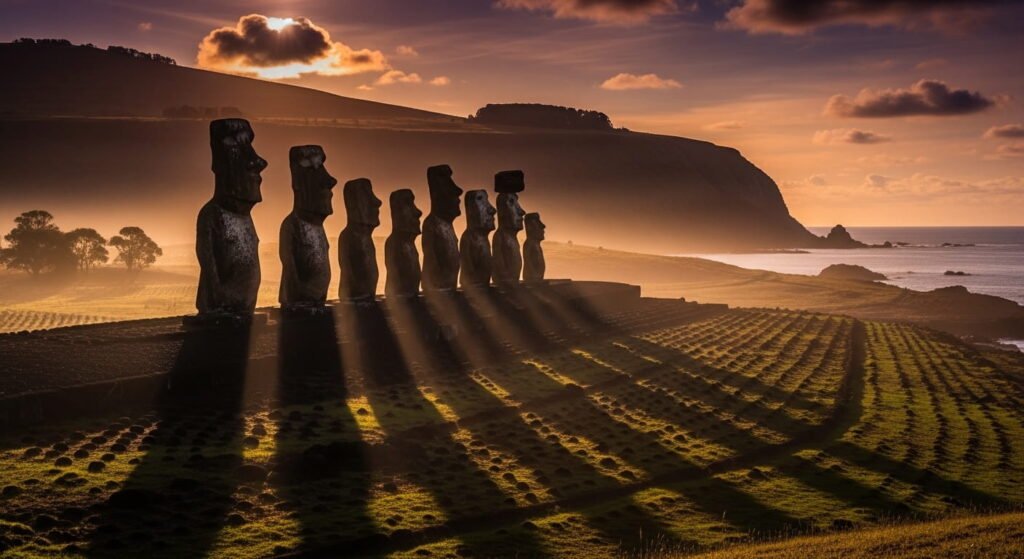

The Moai statues mystery continues to captivate historians, archaeologists, and travelers from around the world. Towering monolithic sculptures scattered across Easter Island (Rapa Nui) represent one of humanity’s most enigmatic feats of art and engineering. Despite centuries of study, the Moai construction secrets and the cultural significance of these statues remain partially shrouded in mystery.
Between the 10th and 16th centuries, the ancient Polynesian people carved the Moai statues from volcanic tuff. They then transported them across challenging terrain and placed them on ceremonial platforms called ahu. They embody a combination of religious, political, and social power, serving as both ancestral symbols and markers of territorial authority.
This article provides an exhaustive exploration of the Moai statues of Easter Island, including their history, construction techniques, purpose, archaeological discoveries, theories, preservation efforts, and the enduring fascination surrounding these Easter Island monuments.
Historical Background: Polynesian Settlement of Easter Island
Easter Island, known locally as Rapa Nui, is located in the southeastern Pacific Ocean, nearly 3,500 kilometers from continental Chile. Polynesians settled the island between 800 and 1200 CE, according to archaeological and linguistic evidence.
The early settlers developed a unique culture, blending maritime navigation expertise with spiritual and social practices. Over centuries, they created monumental works, including the Moai statues, which would come to define Rapa Nui’s cultural landscape.
Society and Governance
The society of ancient Easter Island was organized around clans or extended family groups known as hanau. Chiefs or religious leaders directed the construction and placement of the Moai statues, ensuring that each monument reflected the status and influence of the clan it represented. Oral traditions and legends preserved the cultural memory of ancestry, spiritual beliefs, and political authority, passing knowledge from generation to generation.
Studying this ancient Polynesian culture helps us understand why people created these extraordinary statues and how they shaped the island’s social and spiritual life.
Construction and Transportation of the Moai
One of the greatest enigmas surrounding the Moai statues is their construction and movement. Despite lacking metal tools or advanced machinery, the Rapa Nui people sculpted and transported statues weighing up to 82 tons.
Quarrying the Moai
The primary quarry for the Moai statues was located at Rano Raraku, a volcanic crater on Easter Island. Sculptors carved the statues from volcanic tuff, a relatively soft rock that allowed for detailed shaping. They used tools made of harder stone, primarily basalt picks and chisels, to chisel and refine the figures. Depending on the size and complexity of each statue, carving could take months or even years to complete, reflecting the skill and dedication of the island’s artisans.
Transportation Theories
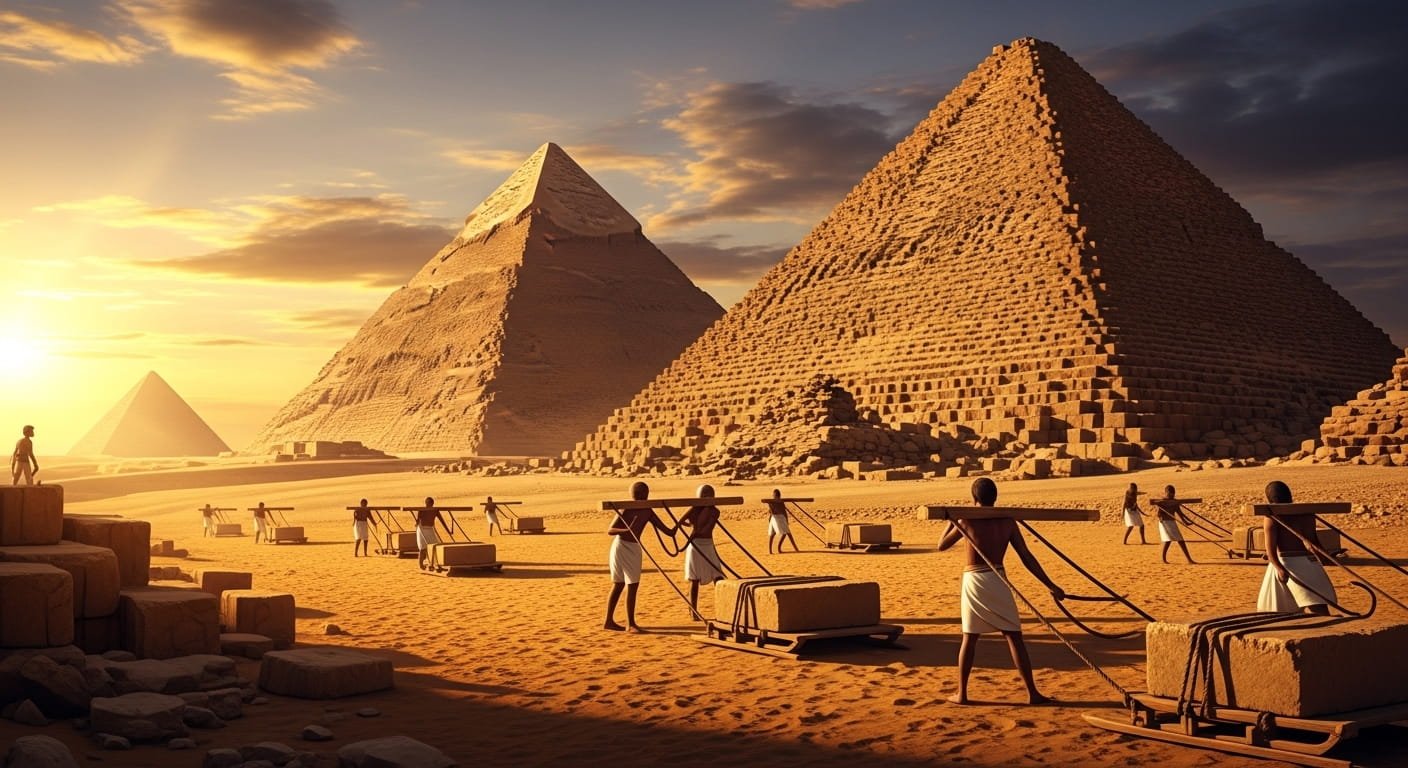
The methods used to move the Moai from the quarry to their ceremonial platforms, or ahu, remain a topic of debate among researchers. Prominent theories include rolling the statues on cylindrical logs, the “walking” method—tilting the statues side to side while pivoting them forward, as demonstrated in modern experiments—and dragging them on wooden sledges using ropes. Each of these methods highlights the ingenuity of the ancient Polynesian culture in solving complex logistical challenges without the aid of modern machinery.
Placement on Ahu
The Rapa Nui people placed the Moai on ceremonial stone platforms called ahu. They often aligned these platforms with astronomical events or used them to mark clan territories. The statues faced inland, symbolically watching over their descendants and communities. The builders constructed stone retaining walls around the platforms and, in some cases, included burial sites beneath them.
Some Moai received carved pukao, or stone topknots, made from red scoria. Moving and positioning the statues required careful coordination, large teams of workers, and sophisticated planning. These efforts demonstrate the Rapa Nui people’s social organization, advanced engineering skills, and deep spiritual dedication.
Purpose and Significance of the Moai
The Moai statues served multiple cultural and spiritual purposes:
Ancestral Worship
The Moai represented deified ancestors who could provide protection, fertility, and prosperity. Each statue embodied the mana, or spiritual energy, of a chief or clan leader.
Political Authority
The Moai statues symbolized clan dominance and territorial claims on Easter Island. The size and number of statues erected by a clan reflected its status and influence, serving as a visible demonstration of power and prestige within the island’s social hierarchy.
Astronomical and Ceremonial Function
Some Moai and ahu were oriented with solar and lunar events, suggesting knowledge of ancient Polynesian astronomy. Rituals and ceremonies likely coincided with these alignments, integrating spiritual and calendrical functions.
Archaeological Discoveries
Archaeologists have uncovered extensive evidence illuminating the Moai statues’ construction and cultural role:
Excavations at Rano Raraku
Over 400 Moai remain partially buried in the Rano Raraku quarry, offering a unique glimpse into the island’s sculptural process. These partially carved and unfinished statues reveal the techniques used by the artisans and provide valuable insight into the planning, design, and artistic methods employed by the Rapa Nui people.
Ahu Sites
The ahu platforms demonstrate sophisticated stone masonry and reflect the Rapa Nui people’s ability to organize large-scale communal labor. Carbon dating of organic material associated with the platforms indicates that their construction and use were active from approximately 1200 to 1600 CE, highlighting the extended period over which these monumental efforts took place.
Toppled Moai
Many Moai statues were toppled between the 17th and 18th centuries, likely as a result of societal collapse, internal conflict, or the effects of European contact. The fallen statues provide valuable insights into their internal structure and the methods used for placement, offering archaeologists a better understanding of how these monumental works were constructed and positioned.
Theories and Speculations
The Moai statues mystery has led to several theories:
Societal Collapse
Some researchers argue that overpopulation, deforestation, and resource depletion led to conflict and the toppling of statues, marking the decline of Rapa Nui society.
External Contact
Speculations exist about pre-European contact with other cultures, but no concrete evidence supports foreign intervention in the construction of Moai.
Engineering Mastery
The “walking” theory demonstrates advanced understanding of balance, leverage, and human coordination, suggesting a highly sophisticated Polynesian engineering knowledge.
Cultural and Historical Impact
The Moai statues continue to inspire people around the world. Tourism to Easter Island draws thousands of visitors each year, captivated by the Moai and the mysteries surrounding them. In art and literature, the statues often symbolize ancient mystery, endurance, and spirituality. From an archaeological perspective, the Moai showcase the ingenuity of isolated societies and the remarkable capabilities of humans working in challenging environments. These monumental figures have become enduring icons of human creativity, resilience, and cultural continuity.
Modern Preservation Efforts
Preserving the Moai statues is essential due to ongoing environmental and human threats. Erosion and weathering from wind, rain, and climate change gradually degrade the volcanic tuff from which the statues are carved. Tourism also poses risks, as foot traffic and occasional vandalism can damage these delicate surfaces.
Restoration programs aim to re-erect toppled Moai, stabilize the platforms, and promote community-led conservation efforts. Organizations such as UNESCO, alongside local Rapa Nui authorities, work collaboratively to protect these iconic monuments for future generations.
Challenges and Mysteries
Despite extensive research, many key aspects of the Moai remain unresolved. Scholars still debate the exact methods used to move the largest statues, the reasons behind the mass toppling of Moai in historic times, and the full significance of their astronomical alignments and cultural symbolism. These enduring mysteries continue to captivate researchers and enthusiasts alike, fueling ongoing fascination with Easter Island and its extraordinary monuments.
Notable Clues and Evidence
- Oral Histories: Legends and chants preserved in Rapa Nui traditions
- Petroglyphs: Rock carvings depicting ceremonial activities
- Stone Quarries: Rano Raraku and Puna Pau quarries provide insight into materials and techniques
- Experimental Archaeology: Modern experiments replicate ancient methods, supporting “walking” and log transport theories
Conclusion
The Moai statues of Easter Island remain among the world’s most remarkable cultural and archaeological enigmas. Their towering forms, construction ingenuity, spiritual significance, and mysterious toppling events illustrate the creativity and complexity of the ancient Polynesian culture.
The Moai statues mystery continues to inspire archaeologists, engineers, and travelers alike, while ongoing preservation ensures that these iconic Easter Island monuments endure for generations to study and admire.
As research advances, experimental archaeology and technological tools may eventually reveal more Moai construction secrets, but the enduring allure of these monumental statues ensures their place among the greatest wonders of human achievement and cultural heritage.
FAQs
Q1: What are the Moai statues?
They are monolithic stone statues built by the Polynesian inhabitants of Easter Island, representing ancestral figures.
Q2: How were the Moai statues moved?
Theories include rolling on logs, dragging with sledges, or “walking” them using ropes and balance.
Q3: When were the Moai statues built?
Most were constructed between 1200 and 1600 CE by the ancient Polynesian culture.
Q4: Why were the Moai statues toppled?
Toppling may have occurred due to clan conflicts, societal collapse, or environmental challenges.
Q5: What is the significance of the Moai statues?
They symbolize ancestral worship, political power, and possibly astronomical knowledge.
Q6: Where can you see Moai statues today?
Most remain on Easter Island, with some toppled and some restored to standing positions.
Q7: What is unique about Moai construction?
The statues showcase sophisticated engineering, precise carving from volcanic tuff, and advanced transportation methods.