




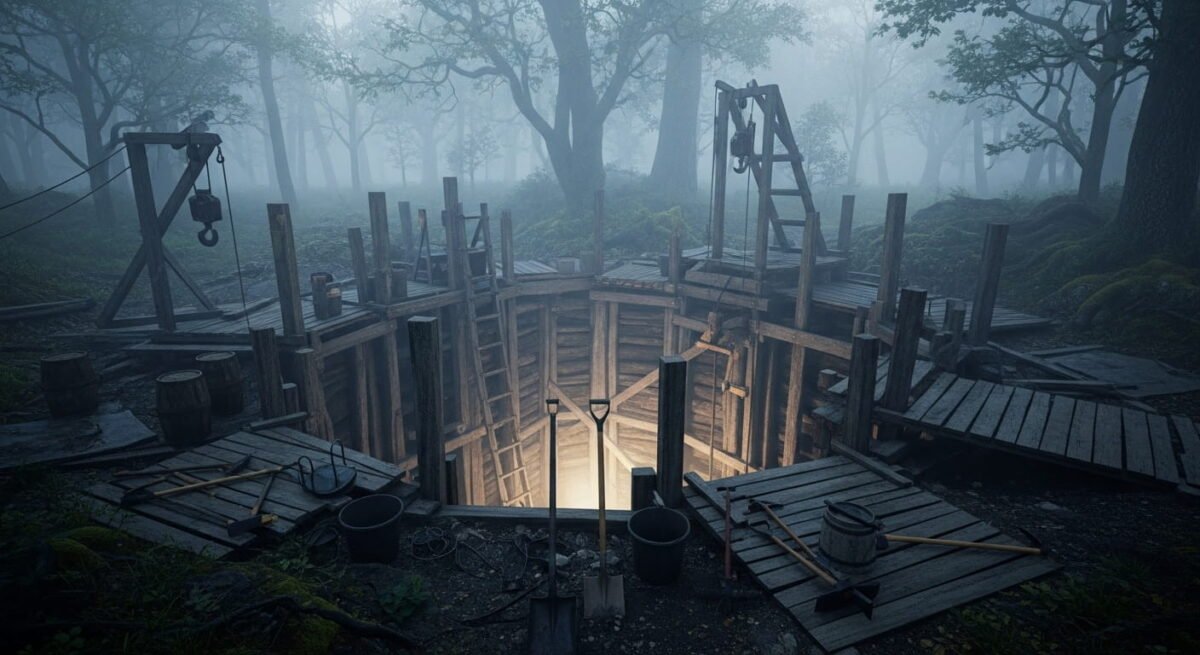

The Oak Island Money Pit is one of the most intriguing and enduring mysteries in North American history. Located off the coast of Nova Scotia, Canada, this mysterious site has captivated treasure hunters, historians, and explorers for over two centuries. The story begins in 1795 when local teenager Daniel McGinnis discovered a circular depression in the ground, sparking a legend of hidden treasure Oak Island that has persisted ever since.
Over the years, countless expeditions, excavations, and scientific investigations have attempted to uncover the Money Pit’s secrets. Some claim it holds pirate gold, ancient manuscripts, religious artifacts, or even the Holy Grail. Despite centuries of digging and millions of dollars spent, the Money Pit legends remain unsolved, fueling both fascination and controversy.
This article delves deep into every aspect of Oak Island: its discovery, the structure of the Money Pit, excavation history, treasure theories, scientific investigations, notable finds, cultural impact, and why the mystery endures.
Historical Background: Discovery of the Money Pit
In 1795, Daniel McGinnis, a teenager living on Oak Island, noticed a depression in the ground near the southwestern shore. According to legend, he observed a tree with its top chopped off and a circular hole about three feet in diameter. Believing treasure might be buried beneath, McGinnis, along with friends, began digging.
They discovered layers of oak logs every ten feet and hints of wooden platforms, suggesting the pit was more than a simple hole. These initial findings gave birth to the Oak Island Money Pit mystery, which would inspire generations of treasure hunters.
Over the next few decades, local and professional explorers conducted various excavations, many of which ended in failure due to natural flooding, collapsing tunnels, and other hazards. This only added to the legend, suggesting that whoever constructed the pit had engineered complex traps to protect the treasure.
The Money Pit Structure
The Oak Island Money Pit is not just a simple hole; it is a complex underground system that has baffled engineers and archaeologists alike.
Layers and Platforms
Excavations revealed that the pit contains multiple layers of logs, clay, and flagstones placed at intervals of 10 to 12 feet. This discovery led researchers to believe the pit was deliberately constructed to safeguard its contents. Some accounts suggest the pit extends over 100 feet deep, with platforms and layers designed to collapse or flood intruders.
Flood Tunnels
One of the most perplexing aspects of the Money Pit is the presence of underground flooding tunnels. These channels appear to connect to the nearby swamp and the Atlantic Ocean, effectively turning the pit into a trap for anyone attempting to dig too deep. Flooding has thwarted nearly every 19th- and 20th-century excavation, adding to the legend of a carefully engineered treasure vault.
Wooden and Stone Construction
The pit contains oak logs, stone blocks, and other structural reinforcements. Some experts suggest that these indicate advanced engineering for the period, while others propose that natural processes or later human interference may explain the anomalies.
Early Excavations (19th Century)
The 19th century saw several organized expeditions aimed at unearthing the Money Pit’s treasure.
First Major Dig (1803–1804)
The first professional dig was led by a group called the Onslow Company. Using basic tools and primitive engineering methods, they attempted to excavate beyond 40 feet. The pit flooded, forcing them to abandon the attempt.
Subsequent Efforts
Between 1849 and 1861, various companies, including the Truro Company and the Oak Island Association, conducted systematic digs. These efforts uncovered wooden platforms, charcoal, and coconut fibers—materials not native to Nova Scotia—sparking speculation about the pit’s origin and its connection to overseas explorers or pirates.
Human Cost
Excavations were dangerous. Several laborers drowned due to flooding tunnels, while others succumbed to accidents during pit exploration. These tragedies fueled the legend of a cursed or protected treasure.
Theories Behind the Treasure
Over the centuries, countless theories have emerged about what lies within the Oak Island Money Pit.
Pirate Treasure
The most popular theory involves the pirate Captain William Kidd, who supposedly buried gold, silver, and jewels on Oak Island. Advocates point to pirate activity in the Atlantic during the late 17th century as evidence.
Knights Templar and Religious Artifacts
Some suggest the pit contains Knights Templar treasure, including manuscripts, religious relics, or even the Holy Grail. This theory relies on the belief that the Templars fled Europe with sacred artifacts and used secret sites like Oak Island to hide them.
Spanish or French Gold
Another theory posits that the Money Pit was constructed to hide Spanish galleon treasure or French colonial riches during periods of war in North America. Evidence includes coins and metal fragments discovered during excavation.
Natural Formation or Hoax
Skeptics argue that the Money Pit is a natural sinkhole, swamp depression, or a deliberate 18th-century hoax. While plausible, the complexity of wooden platforms and flooding channels challenges this view.
Modern Excavations and Scientific Investigations
From the 1960s onward, modern technology has enabled more sophisticated Oak Island excavation efforts.
Engineering Efforts
Companies such as Triton Alliance and modern treasure hunters like Dan Blankenship and the team featured in The Curse of Oak Island used heavy machinery, pumps, and drilling rigs to bypass flooding tunnels. Despite reaching depths of over 200 feet, no definitive treasure has been recovered.
Geophysical Studies
Ground-penetrating radar, sonar scans, and seismic imaging have identified anomalies consistent with tunnels, platforms, and buried materials. These studies support the idea of a complex engineered system but do not reveal the treasure itself.
Notable Discoveries
Although no treasure chest has ever been conclusively discovered, excavations of the Oak Island Money Pit have uncovered intriguing artifacts. These include coins from multiple countries, fragments of parchment and paper, metal tools and spikes, as well as stone markers and wooden platforms. While these finds indicate human activity and deliberate construction, their exact purpose and significance remain speculative, leaving the true nature of the Money Pit a continuing mystery.
Accidents, Legends, and Curse
The Money Pit is often described as cursed, partly due to the mysterious deaths of several explorers and laborers over the centuries. Flooding tunnels and unstable shafts have claimed lives, reinforcing the narrative that the treasure is protected by ingenious traps or supernatural forces.
Legends include:
- Disappearances of workers during excavation
- Strange lights and sounds reported on Oak Island
- Symbolic references in early maps hinting at hidden treasure
Whether fact or folklore, these stories contribute to the enduring allure of Oak Island.
Cultural Impact and Popular Media
The Oak Island Money Pit has captivated the public imagination, inspiring books, documentaries, and television shows. Programs like The Curse of Oak Island on the History Channel chronicle modern excavations and have attracted millions of viewers worldwide. Novels and articles explore theories involving pirates, the Knights Templar, and hidden religious treasures. Over time, the Money Pit has become a symbol of human obsession with hidden treasure, blending adventure, history, and enduring mystery on Oak Island.
Why the Mystery Persists
The mystery of the Oak Island Money Pit persists for several reasons. Despite extensive exploration, no definitive treasure has ever been found. Conflicting reports, legends, and incomplete historical records create ongoing uncertainty about what, if anything, lies beneath the island. A combination of historical, engineering, and geological anomalies continues to fuel speculation. Human fascination with buried treasure ensures that interest and investment in the site remain strong. Each failed expedition only adds to the legend, suggesting that the Money Pit may still hold secrets waiting to be uncovered.
Conclusion
The Oak Island Money Pit remains one of the most enduring treasure mysteries in the world. For over 225 years, explorers have risked life and fortune to uncover its secrets. From pirate gold and Knights Templar relics to mysterious flooding tunnels and layered wooden platforms, every expedition has revealed more questions than answers.
The combination of engineering ingenuity, historical intrigue, and human obsession ensures that the Oak Island excavation saga will continue for generations. Whether the treasure exists or not, the Money Pit legends exemplify humanity’s enduring fascination with the unknown, the pursuit of wealth, and the allure of a mystery that refuses to be solved.
FAQs
Q1: What is the Oak Island Money Pit?
The Money Pit is a mysterious site on Oak Island, Nova Scotia, believed to contain hidden treasure buried centuries ago.
Q2: Who discovered the Oak Island Money Pit?
Daniel McGinnis, a teenager, discovered the pit in 1795 while exploring the island.
Q3: Has any treasure been found in the Money Pit?
Excavations have uncovered coins, wooden platforms, and artifacts, but no definitive treasure has been recovered.
Q4: Why is the Money Pit considered cursed?
Several deaths and accidents occurred during excavation, combined with natural flooding traps, contributing to the “cursed treasure” legend.
Q5: Who were the main modern explorers of Oak Island?
Modern explorers include Dan Blankenship and the Lagina brothers, whose efforts are documented in The Curse of Oak Island.
Q6: Could pirates have buried treasure on Oak Island?
Some theories suggest Captain Kidd or other pirates used Oak Island to hide gold, though no conclusive evidence exists.
Q7: How deep is the Oak Island Money Pit?
Excavations have reached over 200 feet, encountering multiple wooden platforms, flooding tunnels, and other structural anomalies.