




The story of the Princes in the Tower remains one of the most intriguing and enduring mysteries in English history. Edward V and his younger brother, Richard, Duke of York, disappeared under mysterious circumstances in 1483 while lodged in the Tower of London. Their sudden disappearance has sparked centuries of speculation, historical investigation, and countless theories about betrayal, murder, and political ambition.
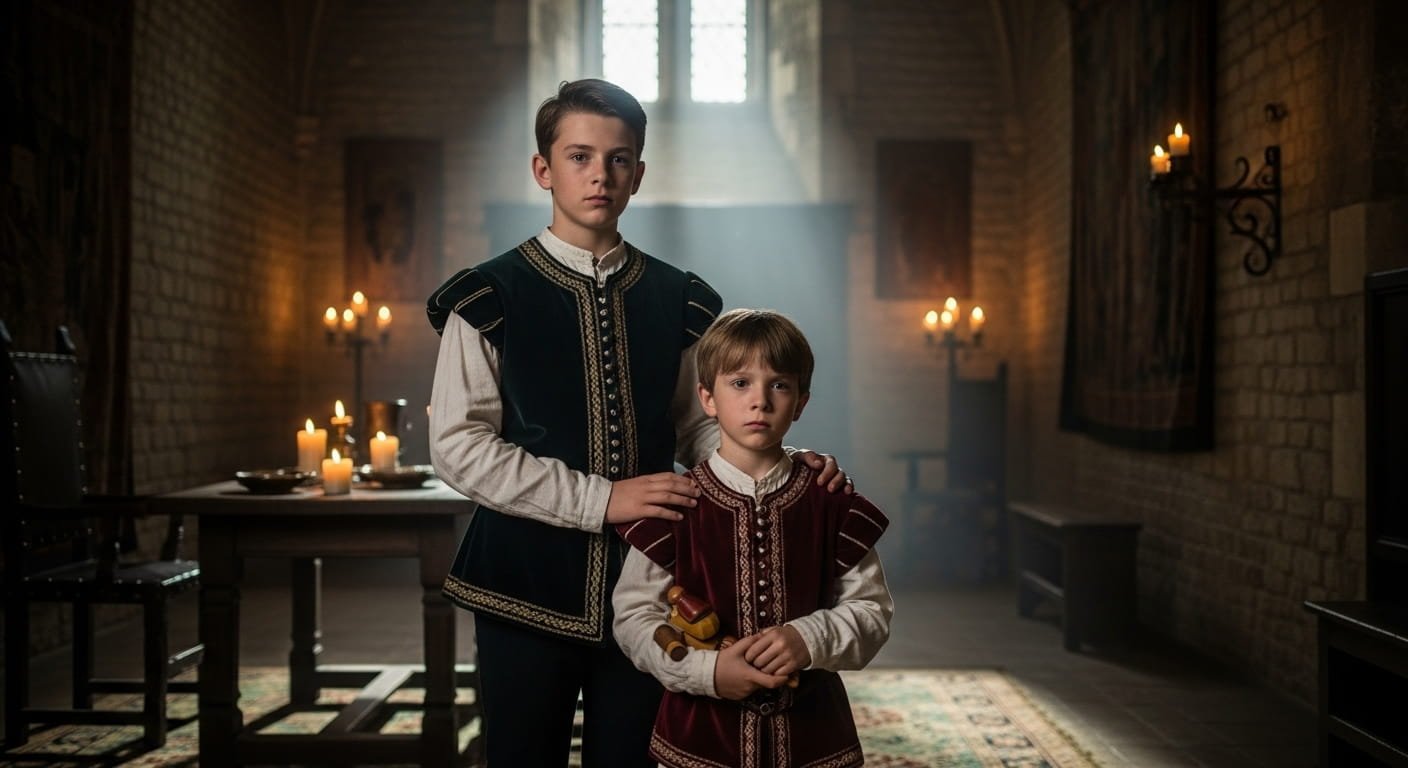
The mystery revolves around the fate of the two young princes, aged 12 and 9, whom officials placed in the Tower for their protection during a politically volatile period. Instead, they vanished, and no one ever saw them again. Many historians link their disappearance to Richard III’s motives, but no one has produced conclusive evidence.
This article explores every aspect of the Tower of London mystery, from the historical context and the princes’ early lives to the political intrigue, modern research, and cultural impact. By the end, you will understand why the story of the Princes in the Tower continues to captivate historians, researchers, and the public alike.
Historical Background
The disappearance of the Princes in the Tower happened during the Wars of the Roses. This was a series of dynastic conflicts between the houses of York and Lancaster. Edward IV, a Yorkist king, died unexpectedly on April 9, 1483. His heir, Edward V, was only 12 years old. By royal custom, Edward V was to be crowned. His youth, however, required a regency to govern the kingdom.
Edward’s uncle, Richard, Duke of Gloucester, became Lord Protector. This position gave him significant authority over the young king and the kingdom. Edward IV’s sudden death created a power vacuum. England became vulnerable to political schemes and rival claims to the throne. It was within this unstable context that the Princes in the Tower mystery unfolded.
The Princes: Edward V and Richard, Duke of York
Edward V
Edward V was born on November 2, 1470, to Edward IV and Elizabeth Woodville. He was a bright and well-educated child, tutored by some of the most prominent scholars of the time. His brief reign, however, was overshadowed by political instability and the ambitions of powerful courtiers and family members.
Richard, Duke of York
Born in 1473, Richard, Duke of York, was the younger son of Edward IV and Elizabeth Woodville. Although he shared his brother’s royal upbringing, Edward’s status as heir often overshadowed him. The two princes were inseparable and raised under the protection of their mother and trusted advisors.
The Tower of London: Royal Prison and Protection
The Tower of London served as a fortress and palace. It also held members of the royal family and political prisoners. Over the centuries, it became a royal residence and an armory. It provided a secure place to protect valuable individuals during periods of unrest. When Edward IV died, the Tower was seen as the safest place for Edward V and his brother. However, it soon became the center of a political power struggle that may have sealed the princes’ fate.
The Disappearance of the Princes
Edward V entered the Tower of London on April 28, 1483. He was accompanied by his younger brother, Richard. The stated purpose was to prepare for Edward’s coronation. In the following months, the princes moved between different apartments. Officials loyal to the crown guarded them closely. Despite these precautions, the young princes disappeared after mid-1483.
Historical records offer conflicting accounts. Some claim the boys were secretly murdered within the Tower. Others suggest they were smuggled out to protect them from political enemies. By June 1483, Richard III declared himself king. He claimed Edward IV’s marriage to Elizabeth Woodville was invalid. This made Edward V illegitimate. The disappearance of the princes coincided with Richard’s rise to the throne, fueling centuries of speculation and mystery.
Richard III and Suspicion
Richard III is the central figure in the debate over the princes’ fate. While contemporary accounts accuse him of orchestrating their murder, some historians argue that he had little motive and that other political players could have been responsible.
Motives Attributed to Richard III
Securing the throne was a primary motive often cited for the disappearance of Edward V, as removing him eliminated a rival claimant. Richard III may also have sought to prevent civil war, believing that consolidating power was necessary to maintain political stability. Additionally, pressure from powerful nobles with competing interests could have influenced the decision to hide or remove the princes. Despite these theories, no definitive evidence directly links Richard III to their disappearance. Modern historians remain divided, with some portraying him as a reluctant actor caught in a volatile and dangerous political environment.
Historical Theories
Several theories attempt to explain the Princes in the Tower mystery:
1. Murder by Richard III
This is the most widely known theory. It suggests Richard III ordered the princes’ deaths to eliminate rival claims to the throne. Supporters cite political motives and the suspicious timing of their disappearance.
2. Murder by Other Nobles
Some historians suggest that other powerful Yorkist or Lancastrian nobles may have acted independently to remove the princes, either to gain favor with the new king or to manipulate succession.
3. Survival or Escape
A few theories propose that the princes escaped or were hidden to protect them from political danger. Some reports suggest that one of the boys may have survived and lived under an assumed identity, though these claims are largely speculative.
4. Accidental Death
Some accounts suggest that the princes may have died of illness or accident while in the Tower, and the royal court suppressed the news for political reasons.
Modern Investigations
Modern research has examined the Tower of London mystery from multiple angles:
Archaeological Evidence
In 1674, workers discovered a small wooden chest beneath a staircase in the Tower containing two child-sized skeletons. Many believe these were the remains of the princes, though DNA testing is inconclusive, and the bones were buried without proper identification.
Forensic Studies
Studies of the remains indicate they were young boys, consistent with the princes’ ages. However, the absence of injuries consistent with murder leaves room for debate.
Historical Records Analysis
Researchers have examined letters, chronicles, and parliamentary records to reconstruct the timeline. Conflicting accounts make it difficult to ascertain what happened definitively.
Political and Social Context
The Wars of the Roses created a chaotic environment. Yorkists and Lancastrians were engaged in a bitter struggle for the throne. The sudden death of Edward IV and the ascension of Richard III heightened tensions, making the Tower a focal point for political intrigue. This context explains why the princes were vulnerable and why multiple factions may have had motives to harm, hide, or control them.
Cultural Impact
The story of the Princes in the Tower has left a lasting impact on literature, drama, and popular culture. Shakespeare’s Richard III famously dramatized the alleged murder of the young princes, cementing the tale in literary history. Countless novels, films, and documentaries have since explored the mystery, keeping public fascination alive. Beyond its historical intrigue, the story serves as a powerful symbol of the dangers of political ambition, betrayal, and the ruthless struggle for power.
Why the Mystery Persists
The mystery of the Princes in the Tower endures because no conclusive evidence exists regarding their fate. Historical accounts are often conflicting and incomplete, and political bias in contemporary reports further clouds the truth. Modern fascination with intrigue, betrayal, and royal scandal continues to keep public interest alive. Historians have researched the case for centuries but still cannot determine whether the princes were murdered, escaped, or died by accident. Their fate remains unresolved and mysterious.
Conclusion
The Princes in the Tower remain one of England’s most haunting historical mysteries. Whether murdered, hidden, or victims of circumstance, their fate illustrates the deadly stakes of royal succession during the Wars of the Roses.
The story endures in part because of the political intrigue surrounding Richard III and the lack of concrete evidence. Historians, writers, and the public continue to find it fascinating. It reminds us how power, ambition, and uncertainty can create enduring questions that may never be answered.
The Tower of London mystery remains unsolved, ensuring that Edward V and Richard, Duke of York, will forever hold a place in the annals of history as symbols of youthful vulnerability amidst deadly ambition.
FAQs
Q1: Who were the Princes in the Tower?
Edward V and his younger brother Richard, Duke of York, were sons of Edward IV who disappeared from the Tower of London in 1483.
Q2: Where did the princes disappear?
They vanished while lodged in the Tower of London during Richard III’s rise to power.
Q3: Did Richard III kill the princes?
While he is the most suspected figure, there is no definitive evidence linking him to their disappearance.
Q4: Were the princes’ bodies ever found?
Two child-sized skeletons were found in the Tower in 1674, believed to be the princes, but their identity is unconfirmed.
Q5: Why did the princes vanish?
Possible reasons include murder for political gain, accidental death, or hiding for protection during a turbulent succession crisis.
Q6: How old were the princes?
Edward V was 12, and Richard, Duke of York, was 9 at the time of their disappearance.
Q7: Why is the mystery still unsolved?
Conflicting historical records, lack of physical evidence, and political manipulation in 15th-century England make it impossible to determine their fate definitively.