



The mystery of Stonehenge has captivated humanity for centuries. Standing silently on Salisbury Plain in Wiltshire, England, this ancient stone circle raises questions that even the world’s best archaeologists, engineers, and historians cannot fully answer.
How did Neolithic communities—without metal tools, without wheels, without written language—move 25-ton stones hundreds of kilometers and arrange them with astronomical precision? What did Stonehenge mean to the people who spent 1,500 years building it?
This complete guide answers every major question about Stonehenge’s history, construction, purpose, astronomical alignments, and the people who built it—drawing on the latest archaeological and scientific discoveries.
The Origins and History of Stonehenge
Stonehenge did not appear overnight. It evolved through multiple distinct construction phases spanning roughly 1,500 years, from approximately 3000 BCE to 1500 BCE. Understanding its origins means understanding not just the stones, but the sacred landscape and the people who gradually shaped it.
Phase One: The Earthwork Enclosure (c. 3000 BCE)
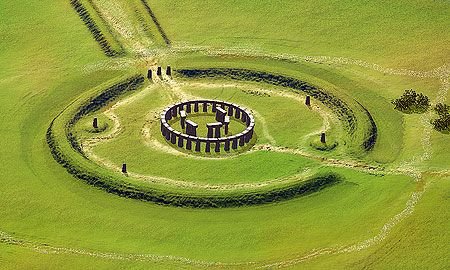
The story of Stonehenge begins not with massive standing stones but with earth. Around 3000 BCE, Neolithic builders dug a circular ditch and bank enclosure approximately 110 meters in diameter. Inside this enclosure, they created 56 pits now known as the Aubrey Holes, named after 17th-century antiquarian John Aubrey, who first identified them.
Archaeological analysis of the Aubrey Holes revealed cremated human remains, indicating that Stonehenge’s earliest function was as a burial ground—possibly one of the largest Neolithic cemeteries in Britain. This funerary use is significant: it tells us that Stonehenge was a sacred landscape long before a single stone was raised.
Phase Two: The Arrival of the Bluestones (c. 2500 BCE)
Around 2500 BCE, builders transported the first standing stones to the site. These were the bluestones—smaller stones weighing two to five tons each, sourced from the Preseli Hills in Wales, over 200 kilometers away.
Their arrival marks a dramatic shift: Stonehenge was no longer simply an earthwork but a monument worth extraordinary labor and logistical effort.
Phase Three: The Great Sarsen Circle (c. 2500–2000 BCE)
The most iconic phase brought the massive sarsen stones — the tall uprights and horizontal lintels that define Stonehenge’s silhouette today. These stones, weighing up to 25 tons each, were transported from Marlborough Downs approximately 20 miles to the north.
They were arranged into a circular outer ring and an inner horseshoe configuration, precisely aligned with the solar calendar.
- 3000 BCE: The earthwork phase begins. Circular ditch, bank, and 56 Aubrey Holes dug. The site was used as a Neolithic burial ground.
- 2500 BCE: Bluestones arrive from Wales. The first standing stones were erected. Long-distance transport implies enormous cultural significance.
- 2400–2200 BCE: Sarsen stones erected. The iconic circular ring and inner horseshoe take shape. Solar alignments built into the design.
- 2000–1500 BCE Final rearrangements. Bluestones rearranged into new configurations. Construction gradually ceases. The site remains in ceremonial use.
Key Facts: Stonehenge Origins
- Stonehenge is located on Salisbury Plain, Wiltshire, England — coordinates 51.18°N, 1.83°W
- Construction began around 3000 BCE and continued for approximately 1,500 years
- The Aubrey Holes held cremated remains of at least 64 individuals, dated between 3000–2500 BCE
- Stonehenge is a UNESCO World Heritage Site alongside the wider Stonehenge, Avebury and Associated Sites listing
- The monument sits within a larger ceremonial landscape including the Avenue, Durrington Walls, and the Cursus
How Was Stonehenge Built? The Ancient Engineering Mystery
Of all the questions surrounding how Stonehenge was built, none has fascinated researchers more than the raw physical logistics. How did Neolithic people — without metal tools, without the wheel, without horses — move and erect stones weighing up to 25 tons?
The answer lies in human ingenuity, large-scale social organization, and a level of engineering sophistication that continues to surprise modern archaeologists.
Moving the Sarsen Stones
The sarsen stones—the tall grey uprights and horizontal lintels — were sourced from Marlborough Downs, about 32 kilometers north of the site. Each weighs between 20 and 25 tons. Researchers believe they were moved using a combination of wooden sledges, timber rollers, and ropes woven from plant fiber.
A workforce of hundreds would have been required to haul each stone, organized into pulling teams and supported by others laying roller tracks ahead of the stone’s path.
Experimental archaeology has confirmed this is feasible. Teams using only Neolithic technology have successfully moved multi-ton stones in modern trials. The challenge was not just physical strength but logistical coordination—managing food supplies, route planning, and maintaining a large, organized workforce over extended periods.
The Bluestone Mystery: 200 Kilometres from Wales
The bluestones present a far greater mystery. Geological analysis has traced them to the Preseli Hills of Pembrokeshire, Wales—over 200 kilometers away from Stonehenge as the crow flies and considerably further by any practical land or sea route. Multiple stone types have been identified, including spotted dolerite, rhyolite, and sandstone, suggesting they came from several distinct quarry sites within the Preseli region.
Three theories exist for how they arrived:
The Precision of the Stonework
Perhaps the most extraordinary aspect of Stonehenge’s construction is the precision of its finishing. The sarsen uprights were shaped and smoothed using stone hammers. The lintels were fitted using mortise-and-tenon joints—pegs carved into the uprights fitting into corresponding holes in the lintels.
This is a technique normally associated with woodworking, applied here to multi-ton stones. The lintels were also shaped with a slight horizontal curve to follow the circle’s geometry. This is not rough prehistoric work. It is skilled, planned, precise craftsmanship.
Social Organization: Who Coordinated It All?
Building Stonehenge required more than physical labor. It required leadership, logistics, and long-term social commitment. Feeding, housing, and coordinating hundreds of workers—potentially across multiple seasons and generations—implies a society with significant hierarchical organization and collective purpose.
Stonehenge was not built by slaves, as some myths suggest. Archaeological evidence from Durrington Walls, a nearby settlement, reveals feasting, celebration, and communal activity, suggesting that building Stonehenge may have been an act of communal devotion, not forced labor.
What Was Stonehenge Used For? The 7 Leading Theories
The central question of Stonehenge’s purpose has generated more debate than almost any other topic in archaeology. The honest answer is that it probably served multiple purposes that evolved over the 1,500 years of its construction and use. Here are the seven most credible and widely discussed theories.
1. Burial Ground & Cemetery
2. Astronomical Calendar
3. Ceremonial & Religious Site
4. Prehistoric Healing Centre
5. Ancestor Veneration Site
6. Political Power Symbol
7. Sound and Acoustic Site
The most important insight modern archaeology offers is this: these theories are not mutually exclusive. Stonehenge almost certainly functioned as a burial ground in its earliest phase, evolved into a ceremonial centre aligned with solar events, and later became a pilgrimage destination where sick people travelled in hope of healing. Its meaning, like all great monuments, accumulated over time.
Stonehenge and the Druids: A Common Misconception
The popular image of Druids performing ceremonies at Stonehenge is one of archaeology’s most persistent myths. The Druids were a Celtic priestly class who flourished from roughly 600 BCE onward — at least 1,400 years after Stonehenge was already ancient.
There is no credible evidence connecting the original builders to Druidic religion. The association developed in the 17th and 18th centuries, when antiquarians romantically linked the monument to the most exotic ancient religion they knew. Modern Druids who gather at Stonehenge today do so as a meaningful spiritual practice, but it is a contemporary tradition, not a historical one.
Stonehenge and the Sun: Astronomical Alignments Explained
One of the most widely accepted and scientifically verifiable aspects of Stonehenge is its precise alignment with the solar calendar. The monument was deliberately oriented to frame key solar events with extraordinary accuracy—a fact that reveals the builders possessed sophisticated astronomical knowledge thousands of years before the invention of telescopes or written star charts.
The Summer Solstice Alignment
On the morning of the summer solstice (around June 21), the sun rises over the Heel Stone—a large unshaped sarsen standing in the entrance avenue of Stonehenge—and its first rays strike directly into the heart of the monument.
This alignment is so precise that it could not be accidental. Thousands of people gather at Stonehenge every year to witness this spectacle, just as they have done for millennia.
The Winter Solstice Alignment
Equally important — and perhaps even more significant to the original builders — is the winter solstice alignment. On the longest night of the year (around December 21), the sun sets precisely between the uprights of the tallest trilithon (the three-stone arch) in the inner horseshoe.
Some researchers argue this was actually the primary alignment, since the winter solstice marked the symbolic death and rebirth of the sun in many ancient traditions—a moment of profound spiritual significance in cold northern Europe.
The Heel Stone
The Heel Stone stands 4.9 meters tall and leans slightly toward the monument. Its positioning in the avenue—the processional approach to Stonehenge—frames the summer solstice sunrise with deliberate precision.
Some archaeologists believe it once had a partner stone, together forming a gateway through which the solstice sun was framed like a picture.
Was Stonehenge an observatory?
The term “astronomical observatory” implies systematic, recorded study of the sky. In that strict sense, Stonehenge was probably not an observatory in the modern scientific tradition. However, it clearly embedded precise solar knowledge into architecture in a way that allowed the entire community to witness and participate in key calendar events.
Whether this served agricultural planning, religious ceremony, or both, the builders had a practical mastery of solar movement that rivals later civilizations in its application.
| Solar Event | Direction | What Aligns | Significance |
|---|---|---|---|
| Summer Solstice Sunrise | N-E | Heel Stone, Avenue axis | Sun enters monument’s heart; longest day |
| Winter Solstice Sunset | S-W | Main trilithon gap | Sun sets between standing stones; death of the year |
| Summer Solstice Sunset | N-W | Station Stone alignment | Framed by outer Station Stones |
| Winter Solstice Sunrise | S-E | Station Stone alignment | Rebirth of the solar year |
Who Built Stonehenge? The Neolithic People of Ancient Britain
Who built Stonehenge is one of the most searched questions about the monument, and modern science has finally given us a surprisingly clear answer. The builders were Neolithic farming communities who had arrived in Britain several centuries earlier, migrating from continental Europe around 4000 BCE.
They were not the native hunter-gatherer populations of Britain; DNA evidence shows they were a genetically distinct group from Anatolia (modern-day Turkey) and the European mainland who brought farming, domesticated animals, and monument-building traditions with them.
What DNA Evidence Reveals
Genetic studies published in recent years have analysed the bones of individuals buried at Stonehenge and across Neolithic Britain. The results show that the builders were overwhelmingly descended from early European farmers of Anatolian origin. Interestingly, the ancient hunter-gatherer population of Britain was almost entirely replaced by these newcomers within a few centuries—one of the most dramatic population turnovers in British prehistory.
These Neolithic farmers brought with them a tradition of building large communal monuments — long barrows, enclosures, and eventually stone circles — as expressions of community identity and religious belief.
Isotope Analysis: People From Far Away
Isotope analysis of teeth found at Stonehenge and nearby Durrington Walls reveals something remarkable: many individuals had grown up far from Wiltshire. Some chemical signatures point to origins in Wales, Scotland, and even continental Europe.
Stonehenge, it seems, was a place people travelled enormous distances to reach — perhaps for seasonal festivals, for burial of their dead, or for healing. This evidence strongly supports the idea of Stonehenge as a nationally significant site drawing people from across the British Isles.
Durrington Walls: The City That Built Stonehenge
About two miles northeast of Stonehenge lies Durrington Walls — the largest known Neolithic settlement in Britain. Excavations have revealed evidence of large-scale feasting (thousands of pig and cattle bones), timber circles, and post holes from substantial wooden structures.
Durrington Walls was likely a seasonal settlement where the workforce that built and maintained Stonehenge lived during the construction seasons. The evidence of abundant food and celebration suggests that building Stonehenge was not merely labor—it was a communal, spiritual, and possibly festive undertaking that entire communities participated in.
Modern Science and Stonehenge
The past two decades have produced a revolution in Stonehenge research. Advanced scientific techniques — many of them non-invasive — have revealed hidden structures, traced the origins of both the stones and the people, and refined our understanding of the monument’s construction timeline. Here is what modern science has uncovered.
Ground-Penetrating Radar
Radar surveys have revealed dozens of previously unknown pits, pathways, and buried structures within the wider Stonehenge landscape—without disturbing a single stone.
Ancient DNA Analysis
Isotope Analysis
Radiocarbon Dating
Geochemical Sourcing
Acoustic Archaeology
The Stonehenge Hidden Landscapes Project
Perhaps the most transformative recent research is the Stonehenge Hidden Landscapes Project, which used a combination of ground-penetrating radar, magnetometry, and other non-invasive survey techniques to map the entire surrounding landscape.
The results were extraordinary: over 17 previously unknown monuments were identified beneath the ground, including burial mounds, pits, and ceremonial enclosures. Stonehenge, researchers concluded, was not an isolated monument but the centerpiece of a vast, layered ritual landscape that its builders constructed and used over millennia.
The Altar Stone: A Recent Discovery
In 2024, researchers confirmed that Stonehenge’s Altar Stone—long assumed to originate from Wales—actually came from northeast Scotland, over 700 kilometers away. This makes it the longest confirmed stone journey in Stonehenge’s history, dramatically expanding our understanding of the monument’s geographic reach and cultural connections.
If a six-ton sandstone block was transported from Aberdeenshire to Wiltshire in the Neolithic period, it suggests a level of interregional connection and organizational sophistication far beyond what was previously assumed.
Stonehenge in Context: How It Compares to Other Ancient Monuments
Stonehenge is the world’s most famous prehistoric stone circle—but it is far from the only one. Understanding how it compares to other ancient monuments helps reveal both its unique features and the broader tradition of megalithic construction that swept across prehistoric Europe.
| Monument | Location | Date | Key Feature | Similarity to Stonehenge |
|---|---|---|---|---|
| Avebury | Wiltshire, England | 2850 BCE | Largest stone circle in the world by area | Same Neolithic builders; overlapping ritual landscape |
| Göbekli Tepe | Şanlıurfa Turkey | 9600 BCE | World’s oldest known megalithic structures | Proof of prehistoric monumental building predates agriculture |
| Carnac Stones | Brittany, France | 4500 BCE | Over 3,000 standing stones in rows | Same cultural tradition; possible shared Neolithic beliefs |
| Newgrange | County Meath, Ireland | 3200 BCE | The winter solstice sunrise enters inner chamber | Same solar alignment; contemporary Neolithic builders |
| Callanish Stones | Isle of Lewis, Scotland | 2900 BCE |
Cross-shaped alignment; lunar calendar use | Scottish megalithic tradition; contemporary with Stonehenge |
| Pyramids of Giza | Giza, Egypt | 2560 BCE | Precisely aligned with cardinal directions | Broadly contemporary; both demonstrate prehistoric astronomical knowledge |
What makes Stonehenge uniquely remarkable—even among this extraordinary company—is the combination of architectural precision, long-distance stone transport, solar alignment, and continuous 1,500-year construction. No other prehistoric monument combines all these elements at the same scale and sophistication.
Visiting Stonehenge Today: What to Know
Stonehenge receives over one million visitors annually, making it one of Britain’s most popular heritage attractions. Here is everything you need to know before you go.
Visitor Essentials
- Location: Amesbury, Wiltshire, SP4 7DE, England. It’s about 2 hours by car from London and accessible by train to Salisbury and then bus.
- Opening hours: Generally 9:30 AM – 5:00 PM (varies seasonally; check English Heritage website for current times).
- Best time to visit: Early morning on weekdays, spring or autumn, to avoid peak summer crowds. June solstice sees special access events.
- Special access: “Stone Circle Experience” tours offer entry inside the inner circle at dawn or dusk—bookable in advance through English Heritage.
- Solstice events: The summer solstice (approx. June 21) and winter solstice (approx. Dec 21) feature free open access from dusk the night before to mid-morning—drawing tens of thousands of visitors.
- Nearby sites: Avebury stone circle (30 min), Old Sarum hillfort, Salisbury Cathedral, Woodhenge, and the Stonehenge and Avebury World Heritage Site landscape.
Cultural Significance Today
Beyond its archaeological importance, Stonehenge has become a powerful cultural symbol. It features in the modern Druidic and Pagan calendar as a site of solstice celebration; it has inspired countless works of literature, music, and film; and it remains a symbol of prehistoric human achievement recognized worldwide.
Each year the summer solstice sunrise draws tens of thousands of people from all backgrounds—a community gathering that, in its own way, echoes the communal spirit that built the monument five thousand years ago.
Conclusion
The mystery of Stonehenge is not a mystery of ignorance. We know a great deal about when it was built, who built it, where the stones came from, and how it aligns with the sky. What remains deeply uncertain — and perhaps always will — is the inner world of the people who built it: their beliefs, their rituals, the words they spoke at solstice, the names of the dead buried in the Aubrey Holes.
That gap between physical evidence and human meaning is what makes Stonehenge permanently compelling. It is a monument built not just of stone but of intention, belief, and collective will.
It reminds us that five thousand years ago, human beings looked at the same sky we see, felt the same desire to mark the passage of time and the cycle of life, and chose to express that impulse by moving mountains—literally. Whatever Stonehenge meant to its builders, it stands today as the most durable testament in the world to the depth of ancient human thought.
FAQs
Who built Stonehenge?
Stonehenge was built by Neolithic farming communities in Britain between approximately 3000 BCE and 1500 BCE. DNA evidence shows they were descended from farmers who migrated from Anatolia (modern-day Turkey) through Europe, arriving in Britain around 4000 BCE.
They were not the Celtic Druids of popular imagination—the Druids came over 1,400 years after Stonehenge was already ancient.
How old is Stonehenge?
The earliest phase of Stonehenge — the circular earthwork and Aubrey Holes — began around 3000 BCE, making it over 5,000 years old. Construction continued in phases until approximately 1500 BCE. The sarsen stone circle, which forms the iconic image we know today, was erected around 2400–2200 BCE.
How was Stonehenge built?
The massive sarsen stones were transported approximately 20 miles from Marlborough Downs using wooden sledges, rollers, and ropes, requiring large, organized teams. The bluestones were transported over 200 kilometers from the Preseli Hills in Wales—likely using a combination of land transport and coastal sea routes on rafts.
Stones were erected by digging deep pits with sloped ramps, levering the stones upright using timber frames, and filling the base for stability. The precision stonework — including mortise-and-tenon joints — was achieved using stone hammers.
What was Stonehenge used for?
Stonehenge likely served multiple purposes over its 1,500-year construction history. In its earliest phase, it functioned as a large burial ground. It was also a ceremonial site aligned with the summer and winter solstices, making it a practical and symbolic calendar.
Evidence suggests it drew people from across Britain as a pilgrimage or healing destination. Later phases may have reinforced its role as a political or religious power symbol for regional leaders.
Why does Stonehenge align with the summer solstice?
The alignment is deliberate. The monument’s main axis faces precisely toward the northeast, where the sun rises on the summer solstice, so that the sunrise rays enter the monument through the Heel Stone and strike the center of the inner circle.
The builders had sophisticated knowledge of solar movement — likely developed over generations of careful observation — and embedded this knowledge permanently in stone.